
The Disappearance of Pollinators — A Slow-Motion Ecological Catastrophe Threatening Global Food Security
- Advertisement -
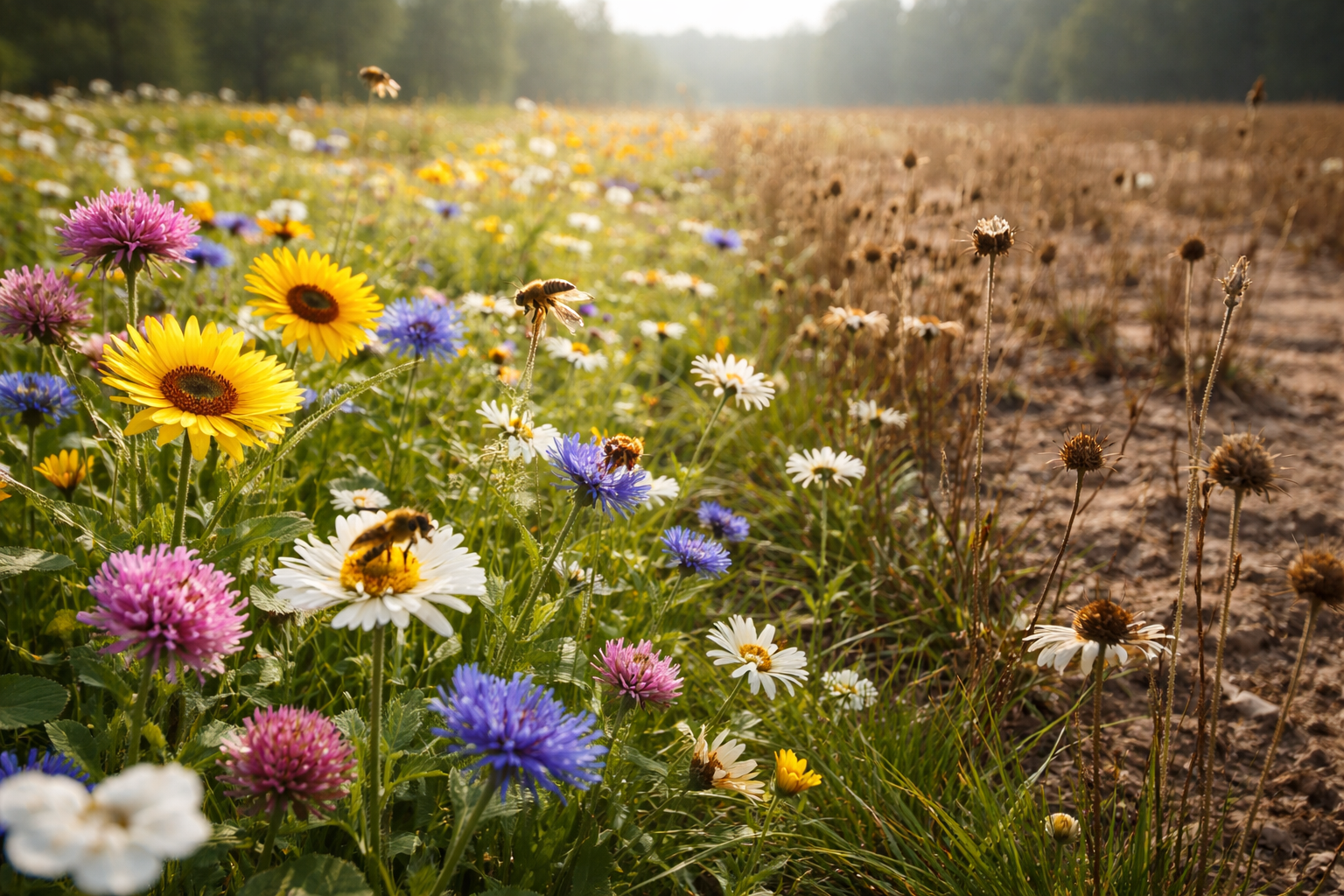
Across fields, forests, and gardens, a quiet crisis is unfolding. Pollinators — especially bees, butterflies, moths, beetles, and certain bird species — are declining at alarming rates. Unlike sudden environmental disasters that capture headlines, this crisis advances gradually. Yet its consequences may be more far-reaching than many immediate catastrophes. The disappearance of pollinators is not just an ecological issue; it is a direct threat to global food security, biodiversity, and economic stability.
Why Pollinators Matter So Much
Pollination is a biological process in which pollen is transferred from the male part of a flower to the female part, enabling fertilization and the production of seeds and fruits. While some plants rely on wind or self-pollination, a large proportion of crops depend on animals to carry out this process.
Pollinators are responsible for the reproduction of:
- Fruits such as apples, berries, and citrus
- Vegetables like cucumbers, squash, and peppers
- Nuts including almonds and walnuts
- Oilseed crops such as canola and sunflower
- Coffee and cocoa plants
Without pollinators, yields drop significantly. Some crops may fail entirely.
It is estimated that a substantial portion of global food production depends directly or indirectly on pollination by insects. This makes pollinators essential not only for dietary diversity but also for nutritional balance.
The Causes Behind the Decline
The reduction in pollinator populations is not driven by a single factor. Instead, it is the result of multiple overlapping pressures.
Habitat Loss
Urban expansion, intensive agriculture, and deforestation reduce the availability of wildflowers and nesting sites. Pollinators require diverse plant life throughout the growing season. Monoculture farming, where vast areas are planted with a single crop, often provides food only for a short period, leaving insects without resources for the rest of the year.
Pesticide Use
Certain pesticides, particularly systemic insecticides, affect pollinators’ nervous systems. Even when not immediately lethal, sublethal exposure can impair navigation, memory, and reproduction. Bees that cannot find their way back to the hive weaken entire colonies.
Climate Change
Rising temperatures and shifting weather patterns disrupt flowering times. When plants bloom earlier or later than usual, pollinators may not be active at the same time. This mismatch reduces successful pollination.
Extreme weather events — droughts, floods, and heatwaves — further stress pollinator populations and destroy habitats.
Diseases and Parasites
Managed honeybee colonies face parasites and viral infections that weaken immunity. While wild pollinators are also affected by disease, they often lack the monitoring and care provided to managed species.
Food Security at Risk
The decline of pollinators affects not only crop volume but also crop quality. Fruits may be smaller, misshapen, or lower in nutritional value without adequate pollination.
A reduction in pollinated crops leads to:
- Increased food prices
- Reduced availability of nutrient-rich foods
- Greater reliance on staple grains
- Economic losses for farmers
Developing regions, where agriculture forms a major part of livelihoods, are particularly vulnerable. In areas already experiencing food insecurity, pollinator decline could intensify malnutrition and poverty.
Beyond Agriculture: Ecological Ripple Effects
Pollinators are foundational to ecosystems. Many wild plants depend on them for reproduction. When pollinator populations decline, plant diversity decreases. This impacts birds, mammals, and insects that rely on those plants for food and shelter.
The loss of plant diversity weakens ecosystem resilience, making landscapes more vulnerable to erosion, invasive species, and further climate stress.
The disappearance of pollinators is therefore not isolated to farms. It affects forests, grasslands, and wetlands — altering entire ecological networks.
Economic Implications
Pollination services contribute billions of dollars annually to global agriculture. Farmers may attempt to compensate for pollinator loss through manual pollination or renting managed bee colonies, but these solutions are costly and not always feasible.
In some regions, hand pollination has already become necessary for certain crops, increasing labor demands and production costs. This approach is neither scalable nor sustainable at a global level.
What Can Be Done
Addressing pollinator decline requires coordinated action:
- Reducing harmful pesticide use
- Encouraging diversified farming systems
- Protecting and restoring natural habitats
- Planting pollinator-friendly vegetation in urban and rural areas
- Supporting research and monitoring programs
Even small-scale changes, such as planting native flowering species in gardens and reducing chemical lawn treatments, contribute to broader conservation efforts.
Policy measures that promote ecological farming practices can also reduce pressure on pollinators while maintaining productivity.
A Crisis We Can Still Prevent
Unlike some environmental losses that are irreversible, pollinator populations can recover if conditions improve. In areas where pesticide use has been reduced and habitats restored, positive trends have already been observed.
The challenge lies in recognizing the urgency of the issue before declines reach a tipping point. Because the disappearance of pollinators happens gradually, it is easy to overlook. Yet the cumulative effect is profound.
Protecting pollinators is not only about saving bees. It is about safeguarding food systems, preserving biodiversity, and ensuring that future generations have access to diverse, nutritious crops.
The slow-motion nature of this ecological crisis makes it less visible — but no less dangerous. Acting now is not simply an environmental choice. It is a strategic investment in global food security and planetary stability.