Closing the Loop — How Companies Are Building Packaging Take-Back Systems
- Advertisement -
As global concern about plastic pollution and packaging waste grows, companies across multiple industries are exploring new ways to reduce the environmental footprint of their products. One of the most promising approaches is the development of packaging take-back systems — programs that allow consumers to return used packaging so it can be reused, recycled, or responsibly processed.
While recycling infrastructure remains inconsistent in many regions, take-back systems offer brands an opportunity to directly manage the lifecycle of their packaging. These programs are becoming an important component of circular economy strategies, where materials are kept in use for as long as possible instead of being discarded after a single use.
Why Packaging Take-Back Systems Are Emerging
Traditional recycling systems often struggle to process certain materials. Flexible plastics, mixed-material packaging, and specialty coatings frequently end up in landfills because they are difficult to separate or economically unviable to recycle through municipal programs.
Take-back initiatives address this challenge by creating dedicated return channels. When companies collect their own packaging, they can ensure materials are sorted, processed, and reused according to design specifications.
For businesses, these systems also provide greater control over supply chains, help meet sustainability commitments, and strengthen brand credibility among environmentally conscious consumers.
Different Models of Packaging Return Programs
Companies use several different approaches when designing packaging take-back systems. The choice of model often depends on product type, distribution channels, and consumer behavior.
In-Store Collection Programs
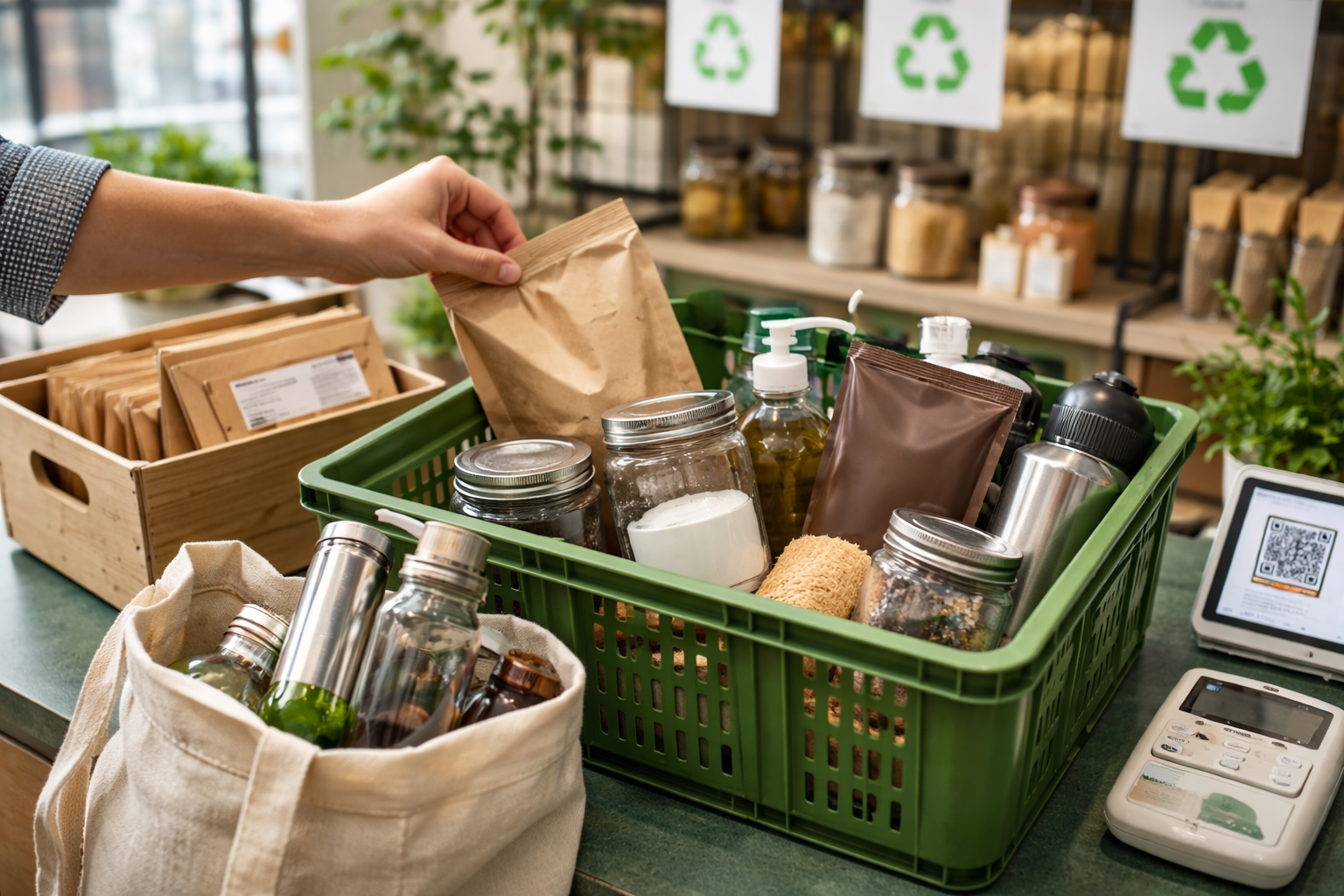
One of the most common models involves collection points located in retail stores. Customers bring back empty packaging containers during their next shopping visit. This system works particularly well for personal care, cosmetics, and food products sold through dedicated retail networks.
In-store collection has the advantage of convenience. Consumers already visiting the location can easily deposit packaging without additional effort. Retailers also benefit from increased foot traffic and opportunities for customer engagement.
Mail-Back Programs
For brands that sell products online or operate without physical retail locations, mail-back systems are a practical solution. Consumers collect their used packaging and ship it back using prepaid envelopes or labels provided by the company.
While this model offers flexibility, it requires careful planning to ensure shipping emissions do not outweigh environmental benefits. Many companies address this by encouraging consumers to return multiple items at once.
Deposit and Reward Systems
Some brands introduce incentives to encourage participation. Deposit-return systems require a small fee when purchasing a product, which is refunded when the packaging is returned. This model has proven highly effective in beverage bottle recycling programs around the world.
Other companies use reward-based systems instead of deposits. Customers may receive loyalty points, discounts, or product samples when they return packaging.
Behavioral research suggests that even small rewards can significantly increase return rates by reinforcing sustainable habits.
Reusable Packaging Models
An increasingly innovative approach involves reusable packaging designed for multiple cycles. Instead of being recycled after one use, containers are cleaned, sterilized, and refilled.
This model is particularly common in food delivery, cosmetics, and cleaning products. Durable containers are collected through return kiosks, delivery pickup services, or retail drop-off points.
Although reusable systems require initial investment in logistics and cleaning infrastructure, they can dramatically reduce long-term packaging waste.
Technology Supporting Take-Back Programs
Digital tools are playing a growing role in managing packaging return systems. QR codes and digital tracking allow companies to monitor packaging cycles, measure participation rates, and optimize logistics.
Mobile apps can guide consumers to nearby return points and provide real-time rewards or incentives. Some systems also track how many times a container has been reused, ensuring safety and quality standards are maintained.
Data gathered through these systems helps companies refine program efficiency and improve sustainability reporting.
Challenges in Implementation
Despite their potential benefits, packaging take-back programs face several practical challenges. Consumer participation is one of the biggest hurdles. If return systems are inconvenient or poorly communicated, participation rates may remain low.
Logistics also require careful planning. Collecting, transporting, sorting, and processing returned packaging adds operational complexity and cost.
Additionally, hygiene and safety regulations must be addressed, particularly for food-related packaging. Containers must be properly sanitized before reuse to meet health standards.
Companies must balance environmental benefits with economic feasibility to ensure programs remain sustainable over time.
Lessons from Early Adopters
Brands that successfully implement take-back systems often follow several key principles:
- Design packaging for circularity. Materials should be easy to separate, clean, and process.
- Make returns convenient. Drop-off points, clear instructions, and simple packaging design encourage participation.
- Communicate transparently. Consumers are more likely to participate when they understand the environmental impact of their actions.
- Use incentives wisely. Small rewards can dramatically improve return rates.
When these elements are combined effectively, take-back systems can transform waste into valuable resources.
The Future of Circular Packaging
As governments introduce stricter regulations on single-use plastics and waste management, packaging take-back programs are likely to become more widespread. Extended producer responsibility policies in several countries already require companies to manage the lifecycle of their packaging.
At the same time, consumers increasingly expect brands to take responsibility for environmental impact beyond the point of sale.
Packaging take-back systems represent a practical step toward a circular economy — one where materials remain in continuous use rather than becoming waste.
For companies willing to rethink product design and logistics, closing the loop on packaging is not only an environmental commitment but also an opportunity to build stronger, more sustainable relationships with their customers.