
Moving Green: How Your Transport Choices Shape the Climate (And What to Choose Instead)
- Advertisement -
Transportation is one of the most powerful — and underestimated — drivers of climate change. Every commute, delivery, road trip, or short ride to the store adds up to emissions that affect air quality, global temperatures, and public health. The good news is that mobility is also one of the areas where individual choices can make a real, visible difference. From electric vehicles to bicycles and shared mobility, the way we move is rapidly evolving — and becoming cleaner, smarter, and more flexible.
Why Transport Matters for the Climate
Globally, transportation accounts for a significant share of greenhouse gas emissions, largely due to the combustion of fossil fuels in cars, trucks, ships, and airplanes. In cities, traffic emissions contribute not only to climate change but also to smog, noise pollution, and respiratory diseases. The climate impact of transport goes beyond tailpipes: vehicle manufacturing, road construction, fuel extraction, and urban sprawl all increase the environmental footprint of mobility systems.
Choosing more sustainable transportation options helps reduce carbon dioxide emissions, lowers energy consumption, and supports healthier, more livable cities. Importantly, no single solution fits all situations — eco-friendly mobility is about balance, access, and smart combinations.
Electric Vehicles: Cleaner Miles, Smarter Energy
Electric vehicles (EVs) are often seen as the flagship of green transport, and for good reason. Unlike conventional cars, EVs produce no exhaust emissions during operation. When powered by renewable energy, their lifecycle emissions are dramatically lower than those of gasoline or diesel vehicles.
Modern EVs offer increasing driving ranges, fast-charging networks, and lower operating costs. They are particularly effective for daily commuting and urban driving. However, they are not entirely impact-free: battery production requires critical minerals, and electricity sources still matter. The most climate-friendly EVs are those charged with clean energy and used efficiently, rather than oversized models driven solo for short trips.
Public Transport: One of the Greenest Choices
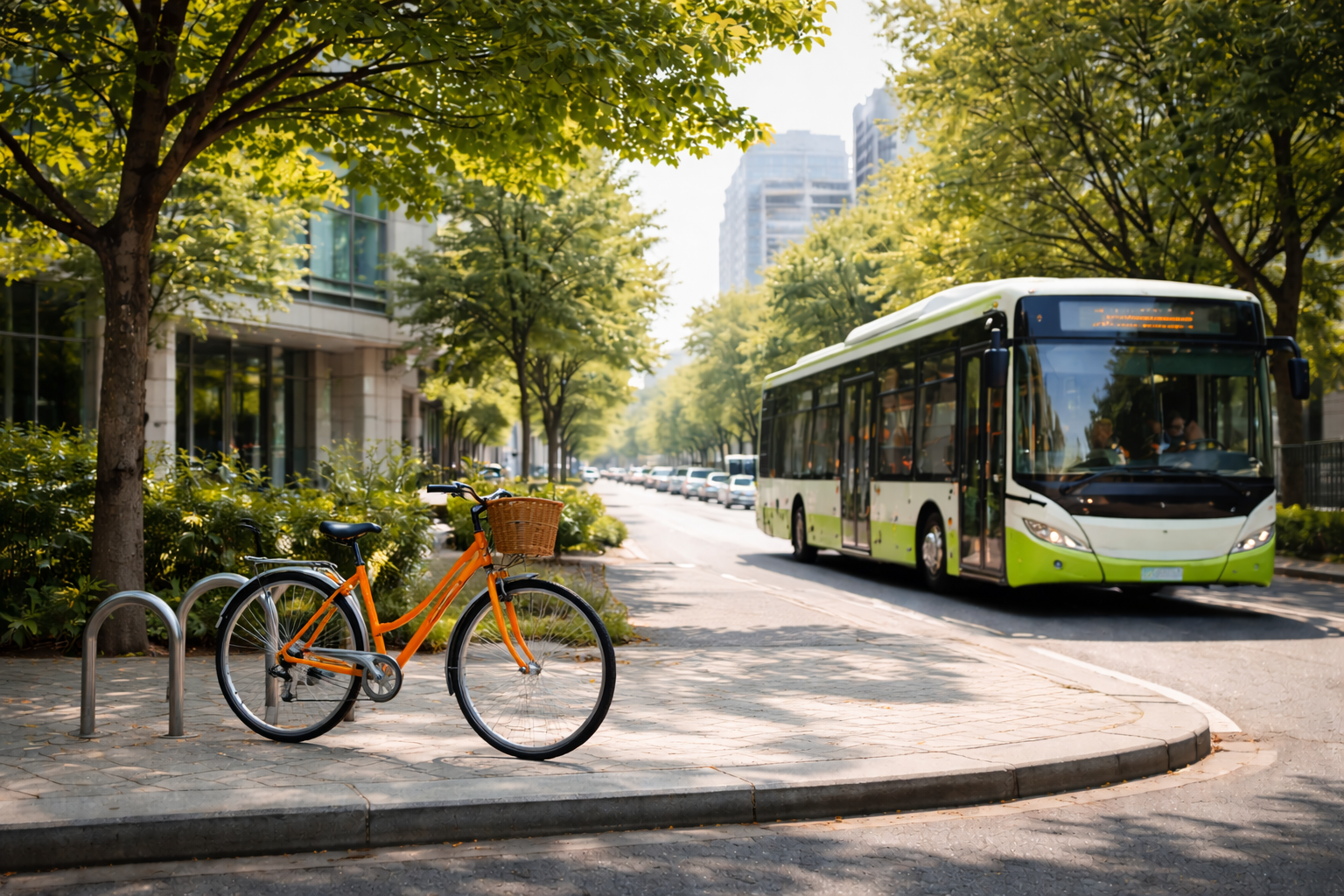
Buses, trams, subways, and trains remain among the most environmentally efficient ways to move large numbers of people. Per passenger, public transport uses far less energy and produces fewer emissions than private cars. Electrified rail systems, in particular, are extremely climate-friendly when supported by renewable power.
Beyond emissions, public transport reduces traffic congestion, saves urban space, and promotes social equity by providing access to mobility without car ownership. Cities that invest in reliable, frequent, and safe public transport often see significant drops in per-capita emissions and improvements in quality of life.
Cycling and Walking: Zero Emissions, Maximum Benefits
Few transport options can compete with bicycles and walking when it comes to sustainability. They produce zero direct emissions, require minimal infrastructure, and improve physical and mental health. For short and medium distances, cycling can be faster than driving, especially in congested urban areas.
Electric bikes have expanded cycling’s reach, making hills, longer commutes, and mixed-age riders more accessible. When cities prioritize bike lanes, safe crossings, and pedestrian-friendly design, active transport becomes not just eco-friendly but practical and enjoyable.
Car Sharing and Ride Pooling: Fewer Cars, Same Mobility
Car sharing, ride pooling, and on-demand mobility services reduce the need for private car ownership. Shared vehicles are typically used more efficiently, replacing multiple personal cars and reducing the demand for parking and road expansion.
When combined with electric fleets and integrated with public transport, car sharing can significantly lower emissions. The key is mindful use: shared mobility works best when it complements — rather than replaces — walking, cycling, and transit.
Choosing the Right Option for Your Lifestyle
The most climate-friendly transport strategy is often a mix rather than a single solution. Walking or cycling for short trips, public transport for commuting, shared or electric vehicles for specific needs — each choice plays a role. Even small changes, such as replacing one weekly car trip with a bike ride or train journey, can reduce emissions over time.
Location, infrastructure, family needs, and physical ability all matter. Sustainable mobility is not about perfection, but about progress and awareness.
The Bigger Picture
Individual choices send signals to markets and policymakers. As demand grows for cleaner transport, cities invest more in bike lanes, charging stations, and transit systems. Manufacturers innovate, and communities become healthier and more resilient.
Climate-conscious transportation is not a sacrifice — it is an opportunity to move smarter, breathe cleaner air, and design a future where mobility supports both people and the planet.