
Nature’s Quiet Comeback: How Restoring Ecosystems Heals the Planet Faster Than We Expect
- Advertisement -
The idea that nature can recover when given a chance is no longer just an environmental slogan. Around the world, scientists, communities, and policymakers are discovering that ecosystem restoration is one of the most powerful tools for caring for the planet. From wetlands and forests to grasslands and coral reefs, damaged ecosystems are showing a surprising ability to regenerate, stabilize the climate, and support life when thoughtful restoration efforts are put into place.
Ecosystem restoration refers to the process of assisting the recovery of environments that have been degraded, damaged, or destroyed by human activity. Unlike simple conservation, which focuses on protecting what still exists, restoration looks backward and forward at the same time. It acknowledges past harm while actively rebuilding natural systems so they can function independently again. This approach has become increasingly important as climate change, pollution, deforestation, and urban expansion continue to put pressure on the planet’s natural balance.
One of the most significant benefits of ecosystem restoration is its impact on climate regulation. Forests, peatlands, and mangroves act as natural carbon sinks, absorbing carbon dioxide from the atmosphere and storing it in biomass and soil. When these ecosystems are destroyed, not only is this storage capacity lost, but large amounts of carbon are released back into the air. Restoring them reverses this process. Replanted forests, rehydrated peatlands, and protected coastal wetlands can lock away carbon for decades, making restoration a natural ally in the fight against global warming.
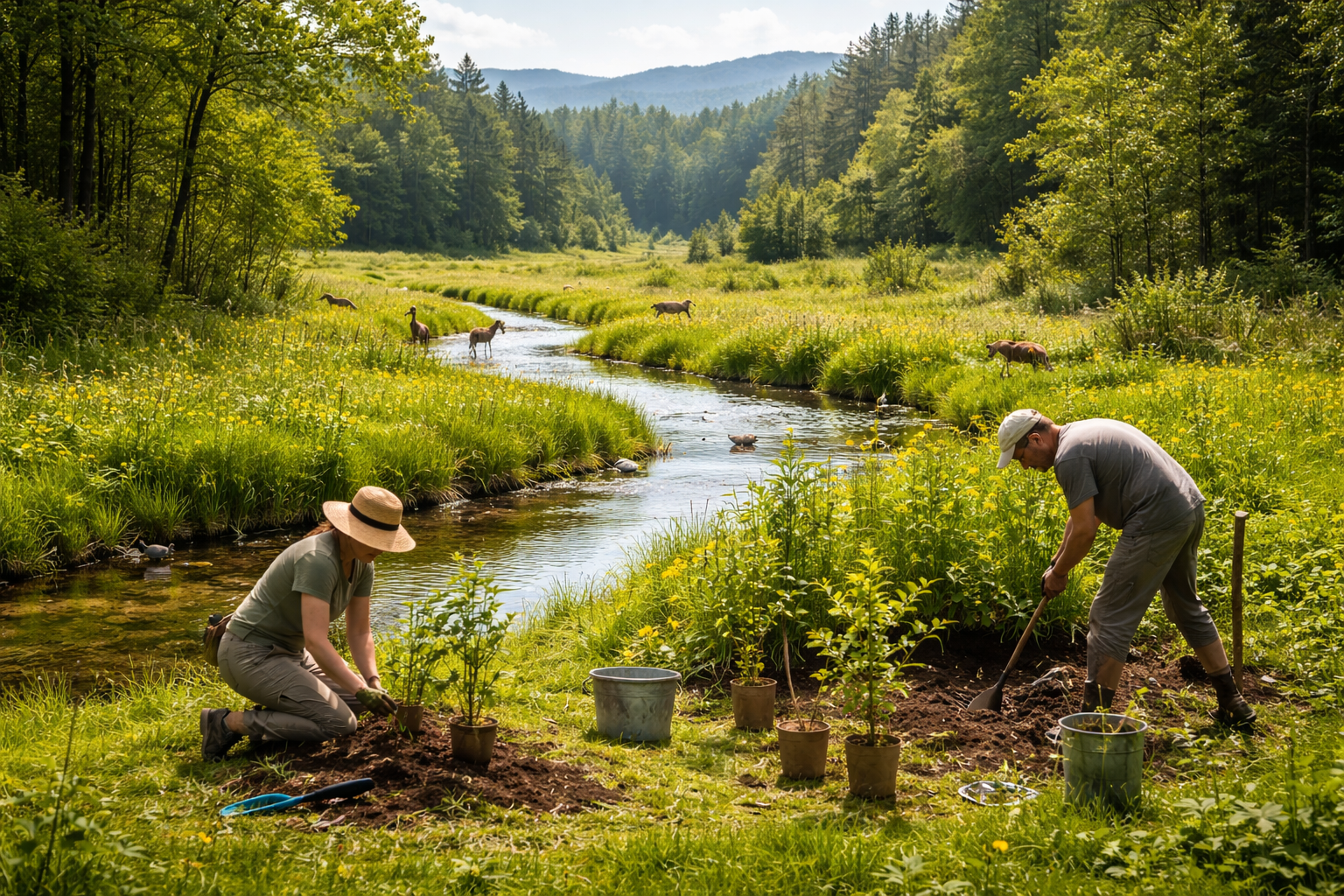
Water systems also benefit profoundly from restoration efforts. Healthy ecosystems filter and regulate water naturally. Wetlands absorb excess rainfall, reducing flood risks, while forests stabilize soil and prevent erosion that can pollute rivers and reservoirs. When riverbanks are restored with native vegetation, water quality improves, aquatic habitats return, and surrounding communities gain more reliable access to clean water. These natural solutions often prove more resilient and cost-effective than purely engineered infrastructure.
Biodiversity recovery is another crucial outcome of ecosystem restoration. Many species are not disappearing because the planet can no longer support them, but because their habitats have been fragmented or destroyed. When ecosystems are restored, plants, insects, birds, and mammals often return on their own. Pollinators reappear in rewilded meadows, fish populations rebound in restored rivers, and birds nest again in regenerated forests. This revival strengthens entire food webs, making ecosystems more stable and adaptable to environmental changes.
Restoration also plays a key role in supporting human well-being. Communities living near healthy ecosystems often experience better air quality, more stable food sources, and increased protection from natural disasters. In rural areas, restored land can improve agricultural productivity by enhancing soil health and water retention. In urban settings, green corridors, restored parks, and natural riverbanks reduce heat, lower stress levels, and reconnect people with nature. Caring for the planet, in this sense, directly translates into caring for ourselves.
What makes ecosystem restoration particularly powerful is that it can happen at many scales. Large international projects focus on restoring entire river basins or reforesting millions of hectares, but smaller local actions matter just as much. Planting native species, allowing land to rewild naturally, removing invasive plants, or restoring a single wetland can create ripple effects that extend far beyond one location. Nature is interconnected, and even modest interventions can trigger broader recovery.
However, effective restoration requires more than simply planting trees or reintroducing species. Successful projects are guided by ecological knowledge and long-term planning. Native species selection, soil conditions, water availability, and local climate all influence outcomes. Equally important is community involvement. When local people understand the value of restored ecosystems and take part in their care, projects are more likely to succeed and endure.
The growing global focus on ecosystem restoration signals a shift in how we think about environmental responsibility. Instead of only minimizing damage, humanity is beginning to actively repair what has been harmed. This shift offers hope in the face of environmental challenges that can feel overwhelming. While restoration cannot undo all damage or replace the need to reduce emissions and pollution, it provides a tangible, visible way to heal the planet.
Nature’s quiet comeback reminds us that the Earth is resilient, but not invincible. When we choose to restore rather than exploit, to work with natural processes instead of against them, we unlock solutions that benefit both the planet and future generations. Caring for the planet, through ecosystem restoration, is not about returning to a distant past. It is about building a healthier, more balanced future where nature and human life can thrive together.