
The Environmental Cost of Fast Delivery: What Same-Day Shipping Really Means
- Advertisement -
Online shopping has transformed the way people buy everything from groceries to electronics. With just a few clicks, products can arrive at the doorstep within hours. Same-day and next-day delivery services have become major selling points for retailers, meeting consumers’ expectations for speed and convenience.
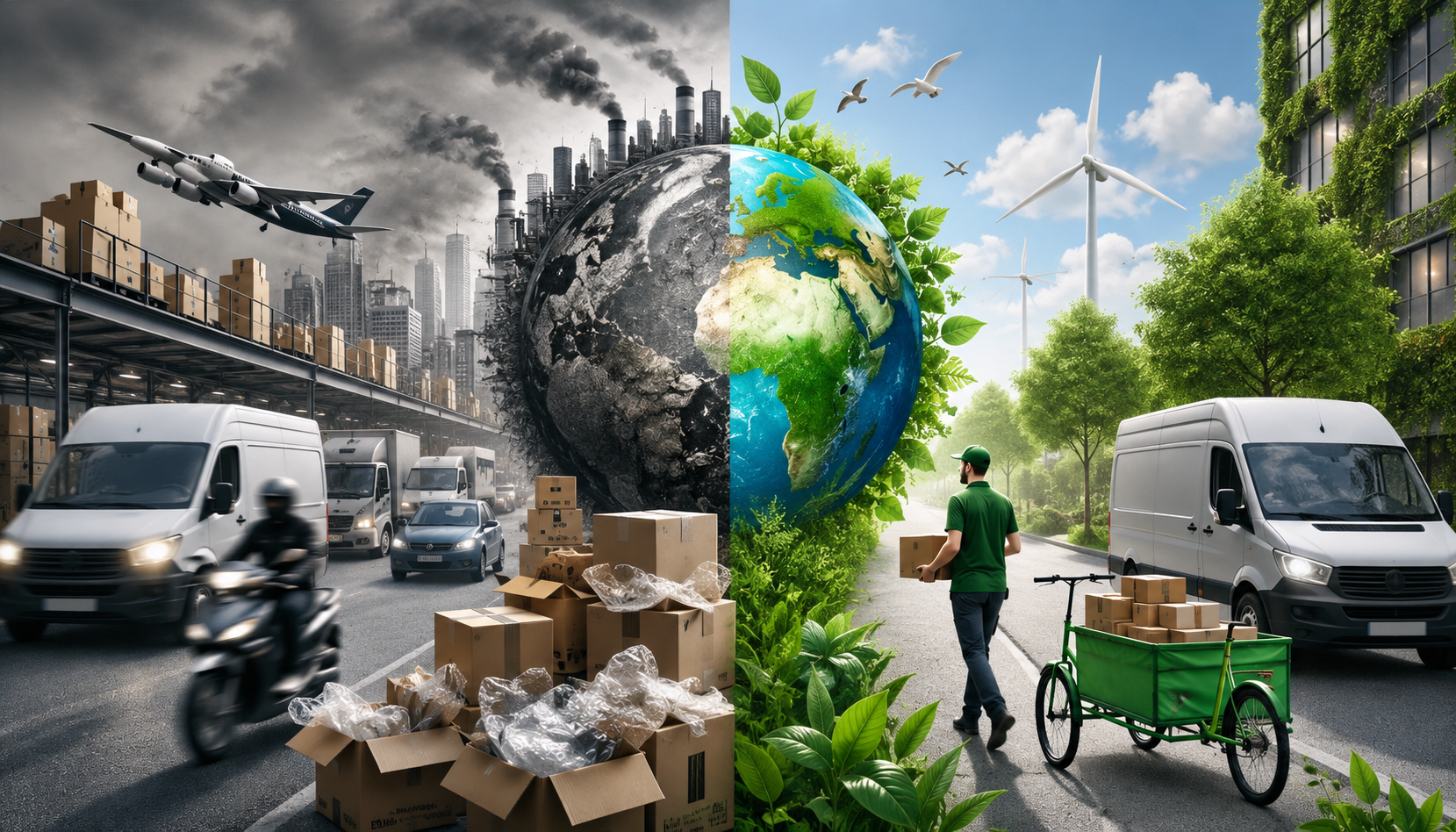
While rapid delivery offers undeniable benefits, it also comes with environmental consequences that are often overlooked. Behind every package delivered within hours is a complex logistics network involving warehouses, delivery vehicles, aircraft, packaging materials, and carefully coordinated transportation systems. The faster an item must arrive, the less opportunity companies have to optimize shipments, and that can increase the environmental impact of each order.
Understanding the true cost of fast delivery helps consumers make more informed choices and encourages businesses to explore more sustainable logistics solutions.
Why Speed Requires More Resources
Traditional shipping allows logistics companies to combine many packages traveling in the same direction into larger shipments. Delivery trucks can operate at high capacity, transportation routes can be optimized, and warehouses have more time to organize inventory efficiently.
Same-day shipping works differently. Time becomes the highest priority, often outweighing efficiency. A delivery vehicle may carry far fewer packages because it cannot wait for additional orders. Drivers may travel longer distances to fulfill urgent requests, increasing fuel consumption and emissions per package.
This reduction in efficiency means that delivering one item quickly can require more transportation resources than delivering several items together over a slightly longer period.
More Vehicles on the Road
One of the most visible consequences of fast delivery is the increase in urban traffic. Delivery vans, motorcycles, bicycles, and other vehicles make frequent trips throughout cities to satisfy immediate demand.
Although many companies are introducing electric vehicles into their fleets, a large portion of deliveries still depend on vehicles powered by gasoline or diesel. More trips often result in greater energy use, increased greenhouse gas emissions, and additional traffic congestion.
Frequent stop-and-go driving in urban environments is generally less energy-efficient than longer, uninterrupted highway travel. Every acceleration, stop, and restart consumes additional energy, particularly for conventional fuel-powered vehicles.
Air Freight and Expedited Transportation
When products need to travel long distances within very short timeframes, companies may rely on faster transportation methods, including air freight.
Air transportation plays an important role in global commerce, but it typically produces higher carbon emissions per unit of cargo than slower methods such as rail or ocean shipping. While not every same-day order involves air transport, the growing expectation for extremely rapid delivery can increase demand for faster transportation options throughout supply chains.
The choice of transportation mode often depends on distance, inventory location, and delivery deadlines.
The Packaging Challenge
Fast delivery also affects packaging practices. To protect products during rapid handling and transportation, companies frequently use additional packaging materials.
Consumers may receive relatively small items inside oversized boxes filled with protective paper, plastic cushions, foam inserts, or air pillows. Although many of these materials can be recycled, recycling systems vary by location, and some protective materials are difficult to process.
Single-item shipments can also increase packaging waste because products that might otherwise have been combined into one delivery are instead packaged separately.
Reducing unnecessary packaging while maintaining product protection remains an important sustainability challenge for retailers and manufacturers.
Warehouses and Energy Consumption
Modern rapid delivery depends on extensive warehouse networks positioned close to major population centers. These facilities often operate around the clock to process orders as quickly as possible.
Running large fulfillment centers requires significant amounts of electricity for lighting, heating, cooling, automation systems, conveyor belts, computers, and refrigeration where necessary.
Many companies are investing in renewable energy, energy-efficient building design, and smarter warehouse technologies to reduce environmental impacts. However, maintaining ultra-fast fulfillment capabilities still requires substantial infrastructure and continuous energy use.
Consumer Expectations and Purchasing Habits
The popularity of same-day shipping has changed consumer behavior. Knowing that products can arrive almost immediately may encourage more frequent purchases, including items that are not urgently needed.
Instead of combining several purchases into a single order, consumers may place multiple small orders over several days. Each shipment requires its own transportation, packaging, and delivery process, increasing the overall environmental footprint.
Impulse purchases also become more likely when waiting times are reduced, potentially contributing to unnecessary consumption and higher levels of product returns.
The Impact of Product Returns
Fast delivery is often accompanied by equally convenient return policies. While customer-friendly returns offer flexibility, they create additional transportation and packaging demands.
Returned products may travel back to warehouses, inspection centers, repair facilities, or recycling locations before reaching their final destination. Some items can be resold, while others require refurbishment, recycling, or disposal.
Every return involves additional handling, transportation, and resource use, making thoughtful purchasing decisions an important part of reducing environmental impact.
Sustainable Alternatives
Consumers who want to reduce the environmental impact of online shopping can often make small adjustments without giving up convenience entirely.
Helpful practices include:
- Choosing standard shipping when immediate delivery is unnecessary.
- Combining multiple items into a single order.
- Using parcel lockers or pickup points when available.
- Planning purchases in advance rather than making frequent urgent orders.
- Supporting retailers that invest in sustainable logistics and environmentally responsible packaging.
These decisions allow transportation networks to operate more efficiently while reducing unnecessary emissions and waste.
How Businesses Are Responding
Many retailers and logistics companies recognize the environmental challenges associated with rapid delivery and are exploring new solutions.
Current innovations include:
- Expanding electric delivery fleets.
- Using cargo bicycles for urban deliveries.
- Optimizing delivery routes with advanced software.
- Introducing recyclable and reusable packaging.
- Building energy-efficient fulfillment centers.
- Offering customers incentives to select slower, lower-impact shipping options.
Technology continues to improve logistics efficiency, helping companies reduce emissions while maintaining reliable service.
Balancing Convenience and Sustainability
Fast delivery has become an important part of modern commerce, supporting businesses and providing convenience for millions of consumers. In many situations—such as urgent medical supplies or essential household items—rapid shipping provides significant value.
However, not every purchase requires immediate delivery. Recognizing the environmental trade-offs allows consumers to make choices that better align with sustainability goals.
Selecting a slower shipping option for non-urgent purchases may seem like a small action, but when multiplied across millions of orders, it can contribute to lower emissions, fewer delivery trips, reduced packaging waste, and more efficient transportation systems.
Conclusion
Same-day shipping represents a remarkable achievement in modern logistics, but its speed comes with environmental costs that are often hidden from view. More delivery vehicles, higher energy use, additional packaging, expedited transportation, and increased product returns all contribute to a larger environmental footprint.
As online shopping continues to evolve, both businesses and consumers have opportunities to reduce these impacts. Smarter logistics, cleaner transportation technologies, responsible packaging, and thoughtful purchasing habits can help create a balance between convenience and environmental responsibility. Choosing the fastest option is sometimes necessary, but choosing the most sustainable option whenever possible can make a meaningful difference for the future of commerce and the planet.